Overview:
Understanding the drivers behind medication adherence helps pharmacies, payors and drug manufacturers develop interventions that may improve patient adherence. Diabetes and statin medications, in particular, help treat chronic conditions that require daily medications and are interesting examples with large patient populations. The goal of this study is to examine how survival analytics methodologies may be applied to predict patient adherence. For many years, state-of-the-art analytics for medication adherence has been cohort analytics studies using Kaplan Meiers and Cox Proportional Hazard curves. This study evaluates tree-based methods such as Random Forest and Gradient Boosting to see how well they might predict patient adherence behavior, in conjunction with other measures, including proportion of days covered of (PDC).
Results


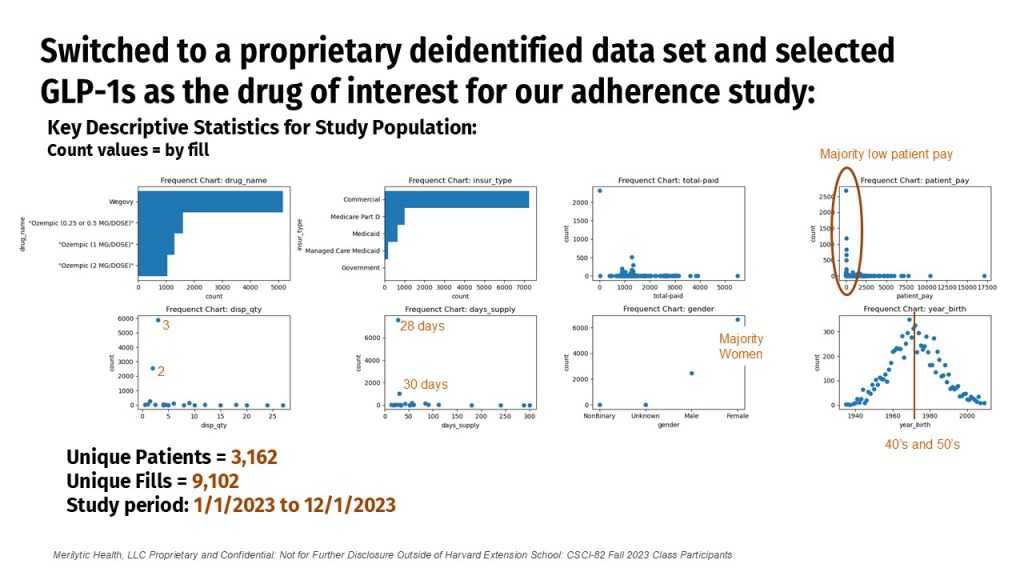
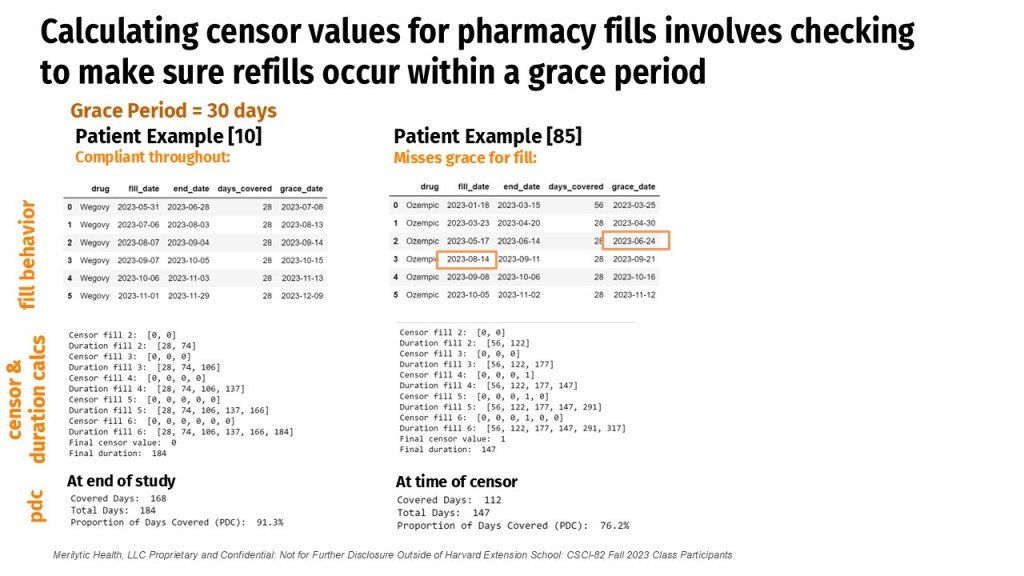
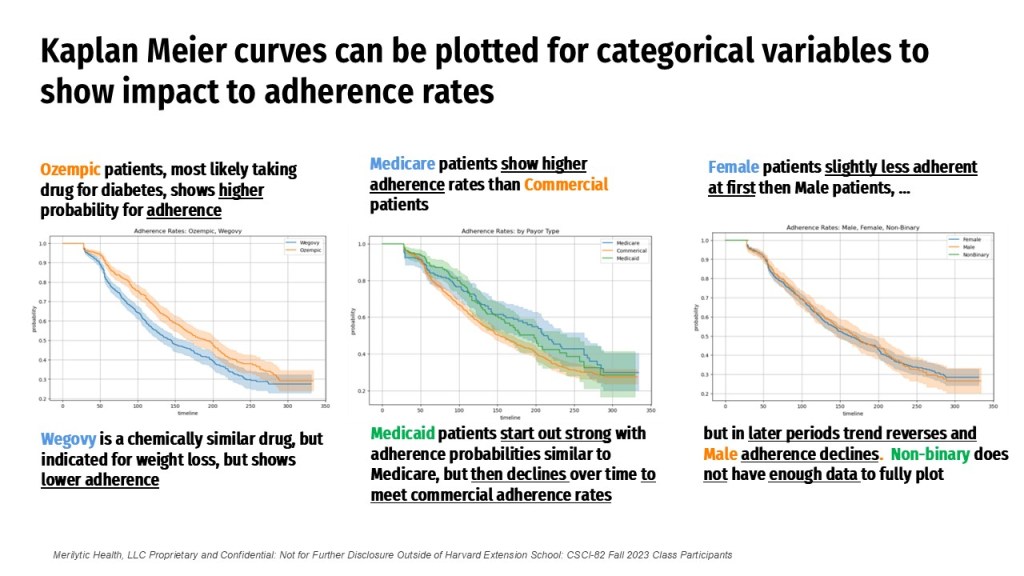
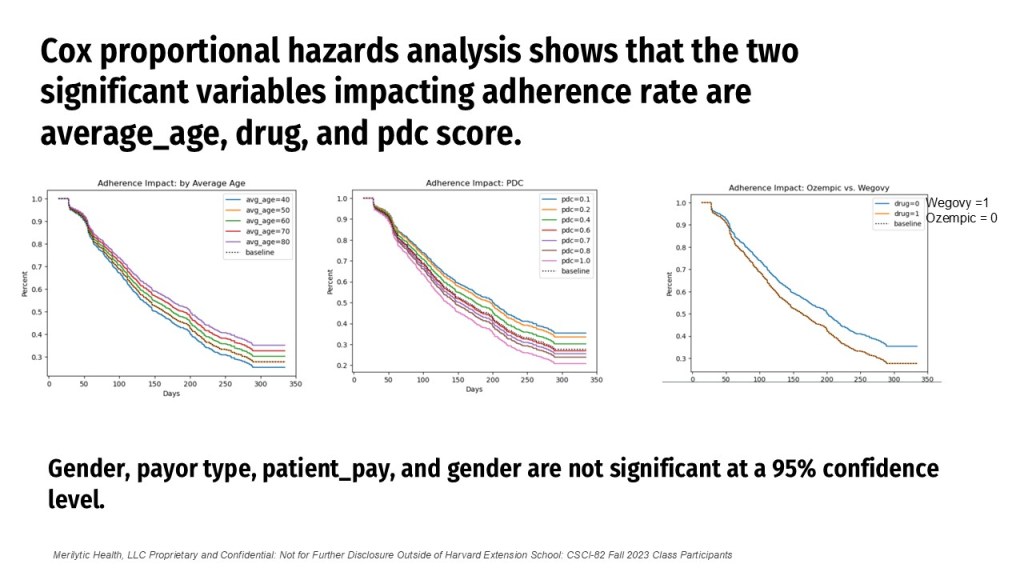
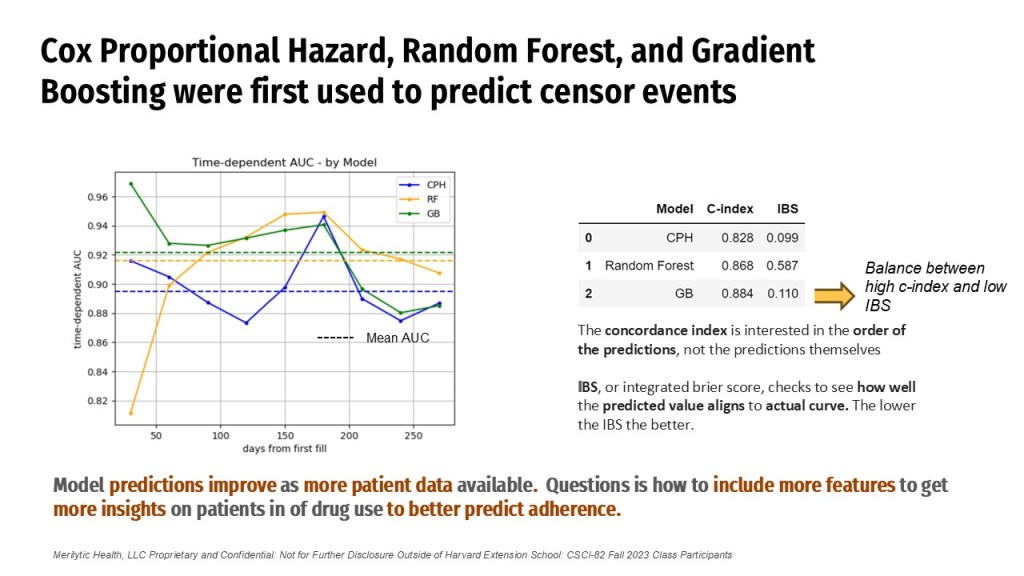
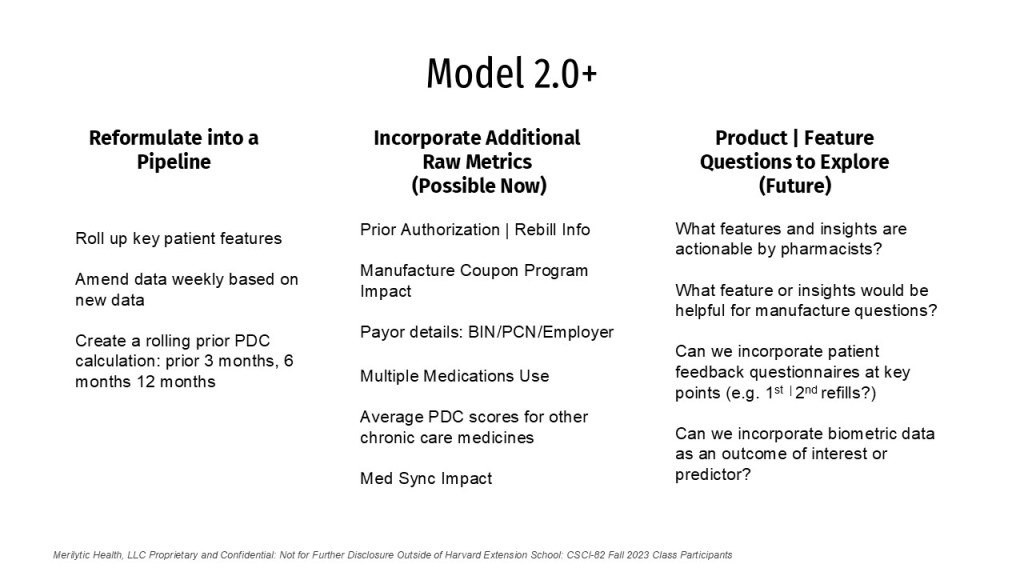
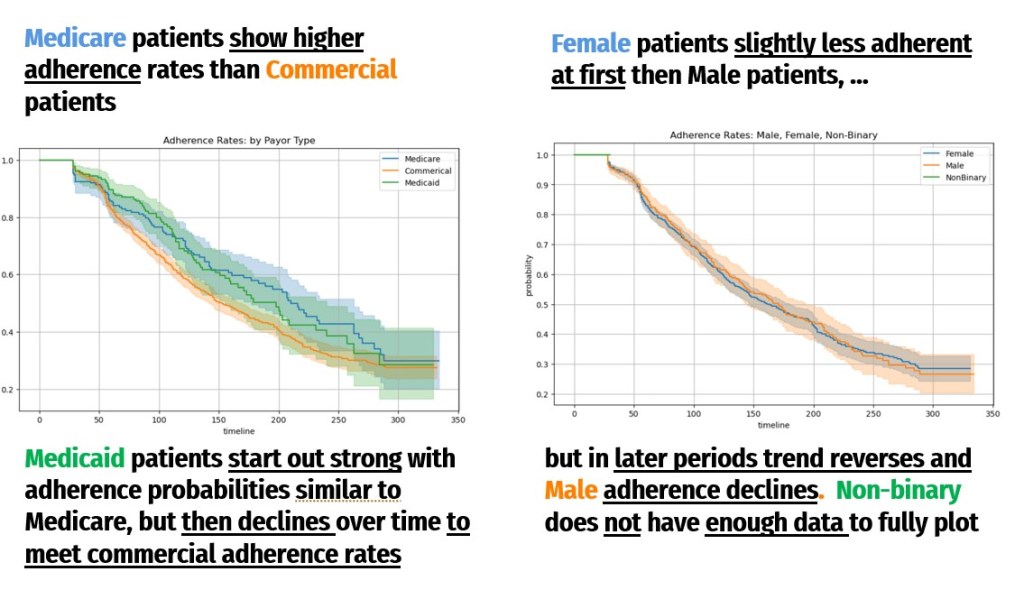
Initial Kaplan Meier and Cox Proportional hazard curves show a sharp drop in probability for survival after the first and second fills (approximately 30 and 60 days for a product that is dispensed in 28 and 30-days supply). Based on the time-dependent AUC curves for GLP-1s, we see our predicted adherence curves improve as the duration increases and we have more knowledge of patient behavior. In the future, introducing average patient compliance or structuring PDC scores in windows of previous compliance (3, 6, 12 month views) could also be used to demonstrate history prior to the study period and could help improve predictive capabilities earlier in the duration window. Finally, additional factors such as prior authorization status and loyalty program use could be interesting to see how or if they improve adherence, given that patient pay amount is a significant factor in predicting adherence.
Deliverables:
Featured Image:
 Merilytic Health
Leave a comment